


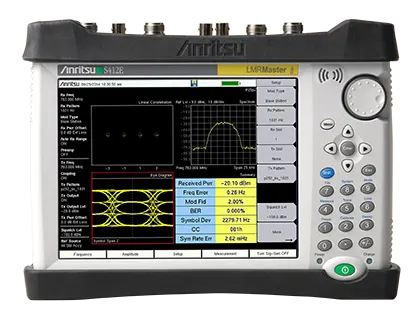
Measurement before and after implementing EMI solutions
Solving electromagnetic interference takes more than installing a shield, a filter or a conductor and assuming the problem has gone away.
At Creativeit we perform comparative measurements before and after a modification. The data make it possible to evaluate the effect of a solution objectively.
What we can evaluate
- Metal shields.
- Enclosures.
- Conductive mesh.
- Conductive gaskets.
- Conductive tapes.
- Wiring modifications.
- Bonding.
- Shield connections.
- Cable routes.
- Cable separation.
- Absorbing materials.
- Grounding configurations.
Comparative methodology
The evaluation can be structured in three stages.
1. Baseline
First, the equipment is measured in its original configuration. Operating conditions, location, distance, orientation, electric field, magnetic field, photographs and equipment parameters are documented. This measurement is the reference.
2. Implementing the modification
The solution to be evaluated is installed. For example:
- Configuration A: original enclosure.
- Configuration B: enclosure with shielding.
- Configuration C: shielding and improved bonding.
3. Comparison
The measurements are repeated under equivalent conditions. This determines the resulting change quantitatively.
Evaluation example
Suppose a piece of equipment shows an initial magnetic field of 850 mA/m. After the wiring is modified it measures 430 mA/m. After the bonding is improved it measures 180 mA/m. The measurement provides experimental evidence of the effect of each modification.
Electric and magnetic shielding
The coupling mechanisms must be distinguished. A shield that works against an electric field component is not necessarily as effective against a magnetic field component. That is why, when technically appropriate, we evaluate both.
Bonding and EMI
The connections between the metal parts of a system influence how it behaves with high-frequency signals. In an EMI investigation, different configurations of the following can be evaluated:
- Bonds between panels.
- Door connections.
- Metal joints.
- Cable shields.
- Enclosures.
- Bonding conductors.
Comparing measurements makes it possible to determine which changes produce an observable change in the field.
Material evaluation
The comparative methodology is also useful for investigating materials that reduce emissions: material A, B and C are measured, and the results are then compared under equivalent conditions. This is useful in product development and material selection.
Diagnosing the solution, not just the problem
Measuring before and after avoids decisions based only on assumptions. Instead of:
“This shield should work.”
you work with:
“The shield produced a measured reduction under the stated conditions.”
That information is far more useful for engineering.
Applications
- Electronic enclosures.
- Inverters.
- Variable frequency drives.
- Power supplies.
- Converters.
- UPS.
- Industrial systems.
- Medical equipment.
- Automotive electronics.
- Control systems.
- Telecommunications equipment.
- Electronic prototypes.
Relationship to EMC
Field measurements can form part of an EMC pre-compliance strategy, especially during product development and diagnostics. However, a diagnostic field measurement does not necessarily replace a formal EMC compliance test when one is required by a standard, a customer specification or a certification process. Its purpose is to provide technical information for finding and reducing emission sources.
Results report
Depending on the contracted scope, we can deliver:
- System description.
- Test conditions.
- Instrumentation.
- Measurement points.
- Photographs.
- Results tables.
- Before/after comparison.
- Identification of critical areas.
- Evaluation of modifications.
- Technical observations.
- Recommendations for continuing the diagnosis.
EMI mitigation engineering
When a product or facility has interference problems, measuring before and after each modification turns the solution into a quantitative procedure.