


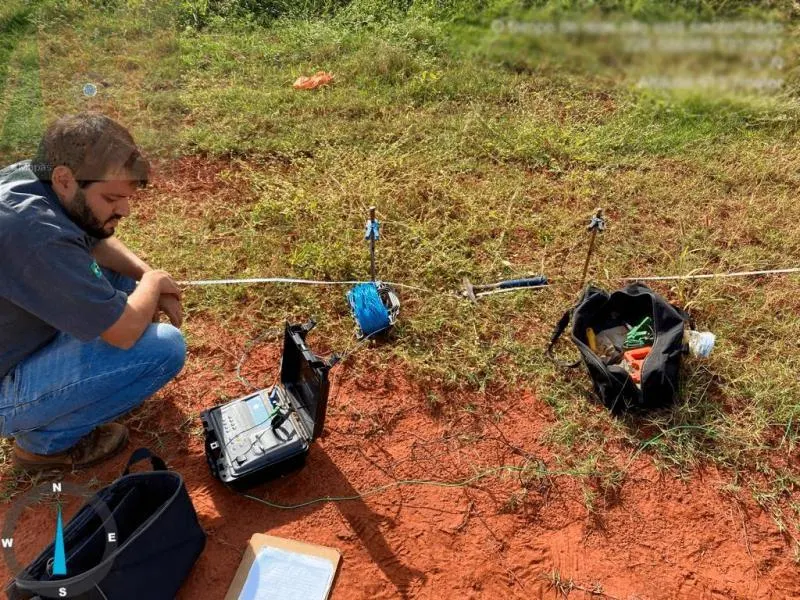
Evaluation of grounding, soil resistivity and lightning protection
A well-designed and well-maintained grounding system is indispensable for personnel safety, the protection of electrical equipment and the operational continuity of any industrial, commercial or critical infrastructure facility. If it is deficient, it can cause protection failures, damage to electronic equipment, electric shock risk and inadequate performance of surge and lightning protection.
At Electrónica Monterrey we carry out complete grounding studies. We evaluate the electrical behavior of the soil, the integrity of the grounding system and the performance of lightning protection systems, with specialized instrumentation and procedures based on IEEE 80, IEEE 81, IEC 60364, IEC 62561, NFPA 780 and NOM-022-STPS, according to the requirements of each project.
Services
Soil resistivity study (Wenner method)
Soil resistivity is the most important parameter for designing an efficient grounding system. With the four-pin Wenner method we determine the specific resistance of the soil at different depths and identify geological variations and layers of different conductivity.
The results make it possible to design optimized grounding systems, select the length and number of electrodes, define ground grids and estimate behavior under fault currents and lightning strikes.
Multilayer resistivity studies
On sites with complex geology we measure at different electrode spacings to obtain a multilayer model of the subsoil. It represents the electrical behavior of the soil more precisely and allows more efficient grounding designs for substations, industrial plants, solar farms and large-area projects.
Ground electrode resistance
We evaluate the individual resistance of vertical electrodes, Copperweld rods, plates, rings and other grounding systems, using fall-of-potential methods and specialized measurement techniques.
The test determines whether each electrode offers a low-impedance path to ground and verifies compliance with the design values or the project specifications.
Grounding system resistance
We determine the total resistance of the grounding system with all electrodes connected together. The test verifies the ability of the system to dissipate fault currents and protect the electrical installation.
It also makes it possible to evaluate deterioration caused by corrosion, poor connections, changes in the soil or expansions of the facility.
Fall-of-potential method (62%)
We measure with the classic 62% method, widely used to determine the resistance of grounding systems when there is enough space to place the auxiliary electrodes. It is one of the reference methods for verifying existing systems.
Selective grounding tests
When the grounding system cannot be disconnected because the facility remains energized, we use selective methods with clamps and specialized equipment that measure resistance without interrupting the operation of the electrical system.
The technique is useful in hospitals, data centers, industrial plants and critical processes where service continuity is indispensable.
Ground impedance
In addition to resistance, we evaluate the impedance of the system under alternating currents. This gives a more realistic picture of its behavior during electrical faults and transient events.
Grounding system continuity
We verify electrical continuity between:
- Ground grids.
- Equipotential busbars.
- Electrical enclosures.
- Metal structures.
- Piping.
- Cable trays.
- Transformers.
- Motors.
- Electrical panels.
Adequate continuity keeps all metal parts at the same potential and reduces the risk of electric shock.
Ground grid evaluation
We inspect and measure ground grids installed in:
- Substations.
- Industrial plants.
- Data centers.
- Photovoltaic installations.
- Airports.
- Hospitals.
- Corporate buildings.
We analyze their electrical performance and detect possible corrosion points, deteriorated connections or increases in resistance.
Lightning protection systems (lightning rods)
We inspect and evaluate lightning protection systems to verify that their components work correctly and offer a safe path to dissipate the energy of a lightning strike. The inspection includes:
- Air terminals (lightning rods).
- Down conductors.
- Joints and connectors.
- Lightning rod grounding system.
- Equipotential bonding.
- Mechanical condition of components.
- Continuity verification.
- Evaluation of the associated grounding system.
Lightning rod down conductor inspection
We check the physical and electrical condition of down conductors to ensure a continuous, low-impedance path, free of mechanical damage or corrosion that could compromise their operation during a strike.
Equipotential bonding
We verify that all metal elements of the facility are interconnected to minimize dangerous potential differences during an electrical fault or a lightning strike.
Evaluation of existing systems
We carry out technical audits of installed grounding systems to identify:
- Increased resistance.
- Corrosion.
- Poor connections.
- Damaged electrodes.
- Design deficiencies.
- Undocumented modifications.
- Risks to personnel.
Applications
We carry out these studies at:
- Electrical substations.
- Industrial plants.
- Data centers.
- Hospitals.
- Automotive industry.
- Refineries.
- Petrochemical sites.
- Mining.
- Generating plants.
- Solar farms.
- Wind farms.
- Corporate buildings.
- Shopping centers.
- Telecommunications.
- Airports.
- Universities.
Benefits
- Greater safety for personnel.
- Protection of electrical and electronic equipment.
- Compliance with national and international standards.
- Lower risk of electric shock.
- Better performance of electrical protection.
- Greater reliability of substations and industrial systems.
- Protection against lightning strikes.
- Optimized grounding system design.
- Early detection of deterioration and corrosion.
Instrumentation
We use ground resistance meters, earth testers, soil resistivity equipment, clamps for selective measurement, low-resistance continuity instruments and software for analyzing and interpreting the results.
Technical report
At Electrónica Monterrey we carry out these studies with specialized personnel and high-precision instrumentation, for the design, evaluation and maintenance of grounding and lightning protection systems. Reports include measurement results, professional interpretation, photographic evidence and recommendations for improving the safety and reliability of electrical installations.