


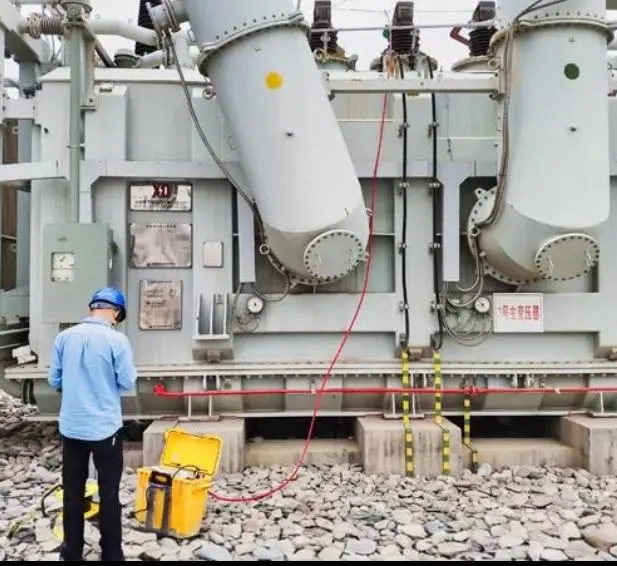
Diagnosing insulation condition and transformer electrical integrity
Power transformers are among the most important assets in an electrical system. An unexpected failure can cause financial losses, production interruptions and costly downtime. That is why periodic electrical testing is essential to know the actual condition of the unit and plan condition-based maintenance.
At Electrónica Monterrey we diagnose transformers with standardized electrical tests, state-of-the-art instrumentation and procedures based on international standards such as IEEE, IEC, ANSI, ASTM and NETA. These studies make it possible to detect insulation problems, defective connections, mechanical deformation, moisture, insulating paper aging and incipient faults in time, before they turn into major breakdowns.
Transformer tests
Turns ratio (TTR)
The Transformer Turns Ratio (TTR) test verifies that the ratio between the primary and secondary windings matches the one specified by the manufacturer. It detects shorted turns, tap changer errors, incorrect connections, polarity problems and damage from transport or a short circuit. A deviation can affect voltage regulation, cause abnormal heating and reduce transformer performance.
Winding resistance
Measures the condition of internal connections and electrical continuity. It identifies loose connections, deteriorated joints, defective solder joints, high-resistance contacts and problems in the on-load tap changer (OLTC). The results also serve as a reference for comparing the unit over time and detecting progressive degradation.
Insulation resistance (megohmmeter)
Determines the ability of the insulation system to block leakage current between windings and to ground. A controlled test voltage yields a measurement that reflects the condition of the solid and liquid insulation. Low values may indicate moisture, contamination, insulating paper aging or dielectric oil deterioration. It is one of the most important basic evaluations for deciding whether a transformer can be safely energized.
Polarization index (PI)
This is an extension of the insulation resistance test: it compares the resistance measured at one minute with the resistance at the tenth minute of voltage application. It provides information on the dielectric absorption of the insulation and helps identify moisture, contamination and degradation. A high index usually indicates dry insulation in good condition; low values may point to internal deterioration.
Dielectric Absorption Ratio (DAR)
Compares the insulation resistance at 30 seconds and at one minute of testing. It is useful when a full polarization index test is not possible because of the available time or the size of the transformer. It allows a quick evaluation of the insulation and detection of anomalies caused by moisture or contamination.
Power factor / tan delta
The power factor (tan delta) test measures the dielectric losses of the insulation system. It is one of the most sensitive tools for detecting insulating paper aging, oil contamination, moisture, oxidation products and other defects that do not yet produce visible failures. It is widely used in predictive maintenance programs to track the evolution of the insulation and make decisions before a failure occurs.
Insulation system capacitance
Verifies the physical integrity of the insulation system and complements the power factor test. Significant changes from historical values may indicate mechanical displacement of the windings, structural deformation or deterioration of the internal insulation. Analyzing capacitance and tan delta together gives a more complete diagnosis of the dielectric condition.
Excitation current
Evaluates the behavior of the magnetic core when a reduced voltage is applied at no load. It detects partial shorts between turns, core damage, assembly problems, mechanical defects and anomalies in the magnetic circuit. It is also used to verify the transformer after a short circuit or transport.
Frequency response (SFRA)
Sweep Frequency Response Analysis (SFRA) is one of the most advanced techniques for evaluating mechanical integrity. The response of the unit at different frequencies reveals winding displacement, deformation from electrodynamic forces, core movement, loosening of internal structures and damage from transport or short circuit. It identifies problems that conventional electrical tests do not detect.
Tap changer (OLTC) diagnostics
The On Load Tap Changer is one of the transformer components subject to the greatest mechanical wear. Specialized tests evaluate the condition of its contacts, the synchronization of the mechanism, the operating time and the dynamic resistance at each tap change. They help prevent mechanical and electrical failures that could compromise operation.
Polarity and vector group
Confirms that the internal connections match the manufacturer’s specifications and the requirements of the electrical system. It is indispensable before commissioning new transformers, after repairs or for operating units in parallel.
Continuity tests
Verifies the electrical integrity of windings, connections, terminals and auxiliary circuits. It detects open conductors, defective connections and faults that could affect safe operation.
Specialized visual inspection
In addition to the electrical tests, we carry out a complete technical inspection to identify oil leaks, corrosion, bushing deterioration and mechanical deformation, and to check the condition of connections, the cooling system, indicators, silica gel breathers and accessories. It complements the instrument tests and allows a comprehensive diagnosis to be issued.
What the set of tests lets you evaluate
- Condition of the insulation system.
- Condition of the dielectric oil.
- Winding integrity.
- Condition of the magnetic core.
- Condition of the tap changer.
- Mechanical integrity of the transformer.
- Risk of future failures.
- Need for corrective or preventive maintenance.
Types of transformers we evaluate
- Distribution transformers.
- Power transformers.
- Step-up transformers.
- Step-down transformers.
- Dry-type transformers.
- Cast-resin transformers.
- Single-phase transformers.
- Three-phase transformers.
- Autotransformers.
- Power reactors.
Benefits of testing
- They increase electrical system reliability.
- They detect failures before they cause interruptions.
- They reduce maintenance and repair costs.
- They extend transformer service life.
- They make it possible to plan condition-based maintenance.
- They support preventive and predictive maintenance programs.
- They lower the risk of catastrophic failures and production losses.
What the report includes
At Electrónica Monterrey we have specialized personnel and diagnostic equipment from recognized manufacturers to test transformers with high precision and traceability. Reports include detailed results, comparison with reference values where applicable, technical interpretation and maintenance recommendations.