What we do
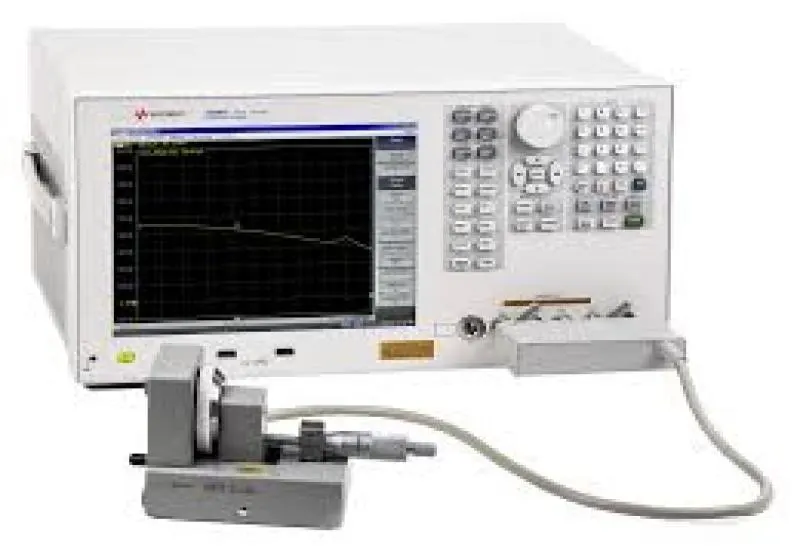
We perform dielectric tests on materials to ASTM D150, as well as their electrical characterization. At our Monterrey laboratory we have suitable equipment and accessories for solids and liquids.
Applications: capacitors, dielectric liquids and the automotive radar industry.
Automotive radars: bumpers and radomes
Why they are tested
Autonomous and semi-autonomous vehicles depend on a complex hardware and software architecture that exploits information from numerous radar sensors. To generate reliable data, the sensors need a clear view of their surroundings. Bumpers or radomes mounted in front of them must not affect radar functionality.
This calls for thorough testing of the plastic parts and their polymer structure. Creativeit Group has tools to characterize the material properties of polymers and their influence on radar signal quality, both in the initial design phase and in the quality control of material development.
The material challenge
Optimizing the composition of bumper and radome polymers involves several demands: a balance between lightweight construction, appearance, functionality and design freedom. With the growing use of radars in cars, material properties are a key factor in overall radar performance.
Reflections and material mismatch cause reflections between the radar and the bumper or radome, which leads to sensor blindness. That is why the composition of the polymers on the exterior of the car must be optimized from the outset to achieve the right radar transparency.
Permittivity
The measurements mainly characterize the permittivity of a material. In simple terms, permittivity determines the compression of the wavelength of a signal transmitted inside the material.
The ideal thickness is always a multiple of half the wavelength inside the material. This is due to the cancellation of reflections by destructive interference at the transitions between air and material, and vice versa.
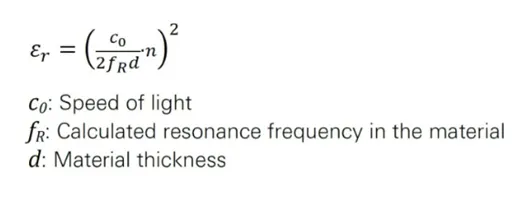
To determine the relative permittivity (εr), the electrical thickness of the sample must be known. The εr can be determined after calculating the resonant frequency.