


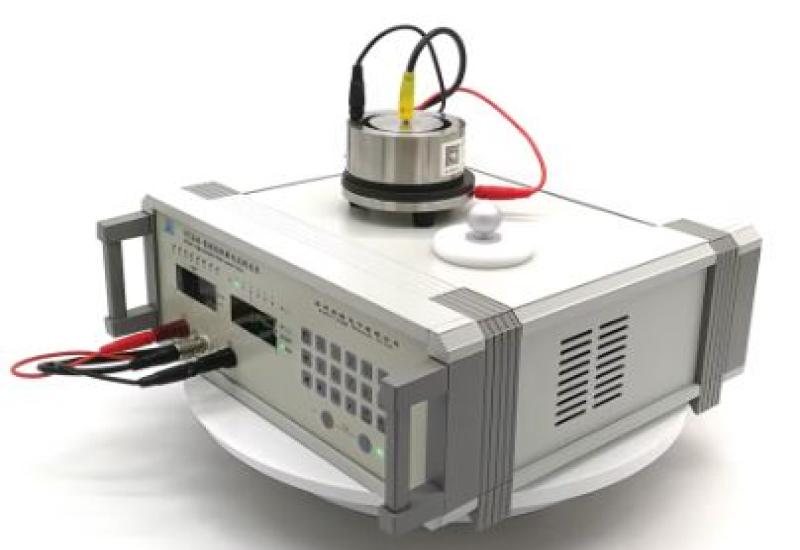
Surface resistance tests on sheets, metals and other materials
Surface resistance analysis and ESD control require standardized measurement methods that ensure repeatable, comparable results. For this we use high-impedance megohmmeters with concentric electrode probes, capable of measuring from conductive to highly insulating ranges.
This measurement is used to evaluate ESD materials, coatings, floors, packaging, work surfaces and industrial components.
Measurement methodology with concentric probes
A controlled DC voltage is applied with a megohmmeter and the electrical surface resistance is recorded with a concentric electrode probe, which geometrically defines the measurement area.
Characteristics of the method:
- Measurement on the same face of the surface.
- Controlled, repeatable contact area.
- High input impedance to avoid loading errors.
- Typical voltages of 10 V, 100 V or 500 V DC, depending on the standard.
The method makes it possible to evaluate conductive, dissipative and insulating materials regardless of the overall geometry of the sample.
Applicable standards
Tests are performed in accordance with international standards:
- ANSI/ESD STM11.11: standard method for measuring the surface resistance of planar materials with concentric electrodes.
- IEC 61340-2-3: test methods for determining resistance and resistivity in ESD control applications.
- ASTM D257: method for measuring the DC resistance of insulating materials, applicable to surfaces and volume.
These standards define:
- Electrode configuration.
- Test voltage.
- Electrification time.
- Environmental conditions.
- ESD classification criteria.
Typical applications
- Evaluation of ESD materials.
- Certification of dissipative surfaces.
- Quality control in electronics manufacturing.
- Validation of coatings and laminates.
- Testing ahead of ESD audits.
Scope of service
The tests make it possible to classify materials as conductive, dissipative or insulating, according to the ranges in the applicable standards. This information is used for process control and regulatory compliance.