


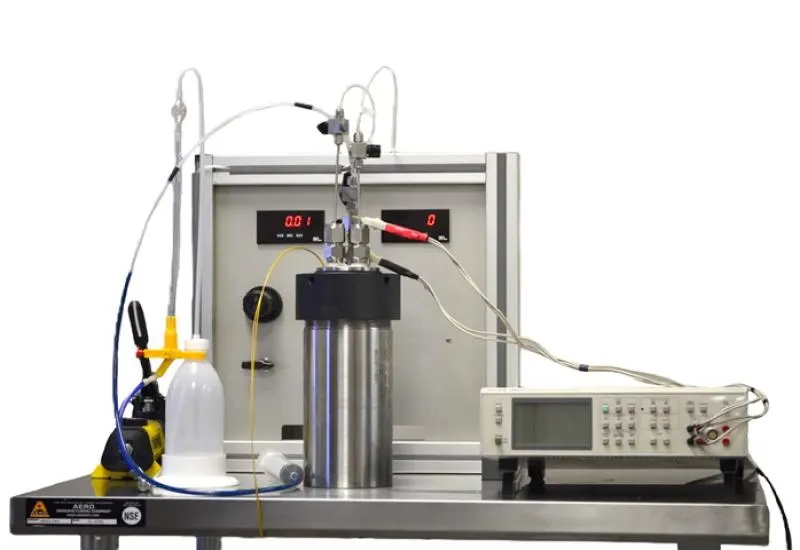
ESD measurement laboratory in Monterrey
Our laboratory in Monterrey has measurement equipment from various internationally recognized Western manufacturers, designed for the electrical evaluation of electrostatic discharge (ESD) control materials.
We combine specialized instrumentation, tightly controlled temperature and humidity chambers, standardized procedures and control of environmental conditions. This gives us accurate, repeatable results that are consistent between measurements.
We have certified calibrators, verifiers and measurement systems for characterizing conductive, dissipative and insulating (insulative) materials. They give us objective information for the validation, classification and quality control of ESD products. The client can witness the tests, and the reports include videos and photographs.
Standards applied
- ANSI/ESD STM 11.11: measurement of volume resistivity in materials used for ESD control.
- ANSI/ESD STM 11.12: measurement of surface resistivity in ESD materials.
- ASTM D-257: standard methods for determining electrical resistance and resistivity in insulating materials.
- EIA-541: electrical requirements for ESD packaging materials used to protect electronic devices.
These standards are issued and maintained by the ESD Association, ASTM International and the Electronic Industries Alliance.
What do we measure?
The tests cover two electrical parameters for electrostatic discharge control.
1. Resistivity
Resistivity indicates how easily a material allows electric current to pass, normalized to its geometry. Depending on the method applied, we evaluate:
- Surface resistivity (Ω/□): the material’s ability to dissipate electrical charges across its surface.
- Volume resistivity (Ω·cm): the internal electrical behavior of the material, relevant in plastics, laminates and composites.
These values are used to classify the material as conductive, dissipative or insulating. This classification is indispensable for ensuring compatibility with EPA (Electrostatic Protected Area) zones.
2. Resistance to ground
Resistance to ground measures how well a product or surface discharges static electricity to ground. It is a critical parameter in:
- ESD floors and coatings.
- Mats and work surfaces.
- Trays, racks and assembly stations.
- Packaging and returnable containers.
Adequate resistance to ground prevents dangerous charge buildup and reduces the risk of damage to sensitive electronic components.
Test methodology
The tests are performed under controlled conditions, following the procedures of each standard:
- Control of temperature and relative humidity.
- Standardized electrodes.
- Test voltages specified by the standard.
- Charge and stabilization times in accordance with each standard.
- Recording of individual values and statistical averages.
Each measurement is documented to ensure repeatability, traceability and technical clarity.
Technical report
On completion we deliver a full technical report that includes:
- Standards applied.
- Description of the measurement method.
- Environmental conditions during the test.
- Detailed numerical results.
- Electrical classification of the material.
- Technical observations and conclusions.
It serves for quality audits, supplier validation, internal regulatory compliance, and technical and commercial support.
Typical applications
These testing static-control products services are used in:
- Electronics industry and EMS.
- ESD packaging manufacturing.
- Data centers and assembly areas.
- Research laboratories.
- ESD solution integrators.
We are members of the IEEE (Institute of Electrical and Electronics Engineers) and of the IEEE Dielectrics and Electrical Insulation Society (DEIS) #94801861.