


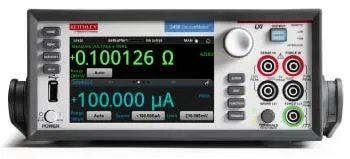
Analysis of electrical behavior under controlled conditions
The electrical behavior of an electronic component reveals its operation, quality, performance and possible fault conditions. At Creativeit we carry out electrical evaluation of electronic devices with specialized instrumentation.
The service is for projects that need to know how a device responds when an electrical variable is changed in a controlled way and its behavior is recorded. With laboratory tests we study different operating points, compare samples and obtain experimental data for engineering, research and development, quality control, design validation and electronic diagnosis.
The goal is not just a voltage or current reading, but a measurement methodology that makes it possible to understand the behavior of the device under test.
Evaluation of electronic devices
Each component or module can have its own electrical characteristics. A controlled evaluation establishes an experimental reference and makes it possible to determine whether the device behaves according to the expected parameters. We can measure:
- Electronic components.
- Semiconductor devices.
- Integrated circuits.
- Circuit boards.
- Control modules.
- Sensors.
- Power circuits.
- Prototypes.
- Low-power devices.
- Electronic assemblies.
The measurement conditions are defined according to the characteristics of the device, the available technical information and the project objectives.
DC source and measurement for engineering tests
The equipment can be used within a test system in which a defined electrical condition is applied and the device’s response is observed. This relates the applied stimulus to the response obtained:
Applied electrical condition → DUT → measured electrical response
This relationship is used to study:
- Power consumption.
- Current variation.
- Voltage variation.
- Operating regions.
- Nonlinear response.
- Residual currents.
- Leakage currents.
- Changes in behavior between samples.
Measuring electrical behavior
A single measurement shows the state of the device at one specific point. Multiple measurements under different conditions give a more complete view. That is why we establish different test points and record the results systematically. From these we build:
- Behavior tables.
- Electrical curves.
- Comparative graphs.
- Operating maps.
- Consumption trends.
- Comparisons between devices.
This is especially useful for characterizing a product before its release to production.
Electronic design validation
During product development, design calculations and simulations must be checked against experimental results. Creativeit supports electronic design validation with measurements on real prototypes and devices, to verify whether certain electrical parameters are within the expected values. A project may require verifying:
- Rated current.
- Standby current.
- Consumption during operation.
- Supply voltage.
- Response to different excitation levels.
- Differences between prototypes.
- Behavior of specific circuits.
The results can then be compared with the original design or with the manufacturer’s criteria.
Semiconductor device characterization
Semiconductors often require electrical measurements under carefully controlled conditions. Current-voltage behavior gives important information about the device. Depending on the component and the test setup, we measure:
- Conduction.
- Current.
- Voltage.
- Residual currents.
- Transition points.
- Behavior across different units.
- Changes relative to a reference sample.
The methodology is defined for each type of semiconductor, because the electrical limits and connections depend on the device.
Electrical curve analysis
Experimentally obtained curves provide information that a spot measurement does not always show. A response curve shows how one variable evolves as another is changed. With the data we analyze:
Slope
Shows changes in the device’s response in different regions.
Threshold
Can help identify points where a significant change in behavior begins.
Linearity
Determines whether the response keeps an approximately linear relationship within a given interval.
Sample-to-sample variation
Curves from different units can be overlaid to detect differences.
Abnormal behavior
A curve that departs significantly from the reference may justify further investigation.
Comparing a good device with a faulty device
For electronic diagnosis it is useful to compare two units: a reference unit against a faulty unit. Both are subjected to the same test conditions and the results are compared, which helps detect differences in:
- Consumption.
- Leakage current.
- Voltages.
- Operating points.
- Equivalent resistance.
- I-V behavior.
Electrical characterization can be part of a broader failure investigation.
Diagnosing abnormal consumption
An unexpected increase in current consumption can indicate an electrical condition different from the one expected. When a piece of equipment shows:
- Excessive consumption.
- Heating.
- Reduced battery life.
- Intermittent faults.
- Restarts.
- Power problems.
it is advisable to carry out an electrical evaluation before replacing components indiscriminately. The ADCMT 6240A can be incorporated into the methodology to determine current behavior under defined conditions.
Standby current tests
In modern electronic equipment, standby consumption can be especially relevant. We evaluate the electrical behavior of the device in different states, when the DUT architecture allows it:
Power OFF → Standby → Sleep → Normal Operation → High Activity
Comparing these states gives useful information for firmware and hardware development and energy optimization.
Evaluating circuit energy efficiency
Consumption characterization also helps optimize electronic products. By knowing the current under different operating conditions, designers identify the states of highest consumption. It is useful for products that are:
- Battery powered.
- Portable.
- IoT.
- Embedded systems.
- Sensors.
- Wireless devices.
- Instrumentation.
- Automotive electronics.
Component leakage current analysis
Leakage currents can be important in certain applications. The measurement establishes the behavior of the device when it should show a low current under a specific condition. We run comparative tests to determine whether several units behave similarly or whether any sample deviates from the others. Acceptance limits must be set according to the device specification.
Prototype validation tests
Before manufacturing large quantities of a product, it is common to evaluate prototypes. Creativeit measures the first units to obtain experimental information about the design. The process may include:
Prototype identification
The model, revision and sample number are recorded.
Definition of conditions
The electrical parameters to be applied are established.
Measurement
The defined sequence is executed.
Recording
The results are stored for analysis.
Comparison
Different units or conditions are compared.
Report
The results obtained are documented.
PCB characterization
Circuit boards can be evaluated with direct measurements at defined test points. Depending on the design, we work with:
- Power points.
- DC lines.
- Individual circuits.
- Inputs.
- Outputs.
- Specific nodes.
- Selected components.
If you have schematics, Gerber files, a BOM or technical documentation, we use them to establish a more precise evaluation methodology.
Evaluating power circuits
The power section of a PCB is critical to the operation of the entire system. We measure the behavior of different power rails and determine the associated consumption. It is useful in:
- Power supply development.
- Regulator validation.
- Board diagnosis.
- Prototype evaluation.
- Failure investigation.
- Design optimization.
When the dynamic behavior of the power supply must be observed, DC evaluation can be complemented with oscilloscope measurements or other instrumentation.
Engineering tests for research and development
We support electronics R&D projects that require experimental measurements. We work from the available information about the device and the technical objective. You can provide just:
- A sample.
- A datasheet.
- A measurement objective.
- A fault condition.
- An expected value.
With that information we analyze the methodology needed for the evaluation.
Developing measurement methodologies
Not all projects have a defined test procedure, so we develop specific methodologies. A methodology may establish:
DUT → Connection → Initial condition → DC stimulus → Settling time → Measurement → Change of condition → New measurement → Data logging → Analysis → Report
The exact sequence depends on the device and the objective of the test.
Evaluating lot-to-lot variation
When there are differences between production lots, electrical characterization can be used to compare them: Lot A vs. Lot B, or Supplier A vs. Supplier B. The results show whether there are systematic differences in the measured parameters. It supports investigations into:
- Supplier changes.
- Material changes.
- Process changes.
- Component substitution.
- Production problems.
- Quality variations.
Quality control tests
Electrical characterization can also be incorporated into internal quality control programs, to verify that a sample meets certain parameters before continuing with the production process. The acceptance criterion can be set using:
- Manufacturer specifications.
- Datasheet.
- Internal specifications.
- Customer-defined limits.
- Values obtained from a reference sample.
Product engineering
Engineering teams can use electrical test data to make product decisions, for example:
- Changing components.
- Optimizing power.
- Reducing consumption.
- Selecting suppliers.
- Comparing technologies.
- Validating changes.
- Investigating problems.
In this way, measurements stop being just an instrument reading and become information for development.
Information we need to prepare a quote
To prepare a technical and commercial proposal we request, when available:
- Device information: manufacturer, model, part number and description.
- Documentation: datasheet, wiring diagram, schematic, manual, BOM and Gerber files.
- Test objective: measure consumption, obtain an I-V curve, compare samples, investigate a fault or validate a prototype.
- Number of samples: how many units will be evaluated.
- Test conditions: the voltages, currents or special conditions required, if already defined.
Service deliverables
Depending on the contracted scope, we can deliver:
- Measurement results.
- Data tables.
- Graphs.
- Characterization curves.
- Comparison between samples.
- Test conditions.
- Sample identification.
- Instrumentation record.
- Technical observations.
- Results report.
The format and level of detail of the report can be defined before the project starts.
Electronic evaluation laboratory in Monterrey
Creativeit provides electronic engineering, measurement and characterization services in Monterrey, Nuevo León, to companies that require experimental information about components, circuits, boards and electronic devices. We develop specific tests for projects involving:
Design → Prototype → Validation → Diagnosis → Optimization → Quality control
If you need to know the electrical behavior of a component, module or board, we analyze the test requirements and determine the appropriate instrumentation and methodology. Send us the available technical information and describe which parameter you need to evaluate.