


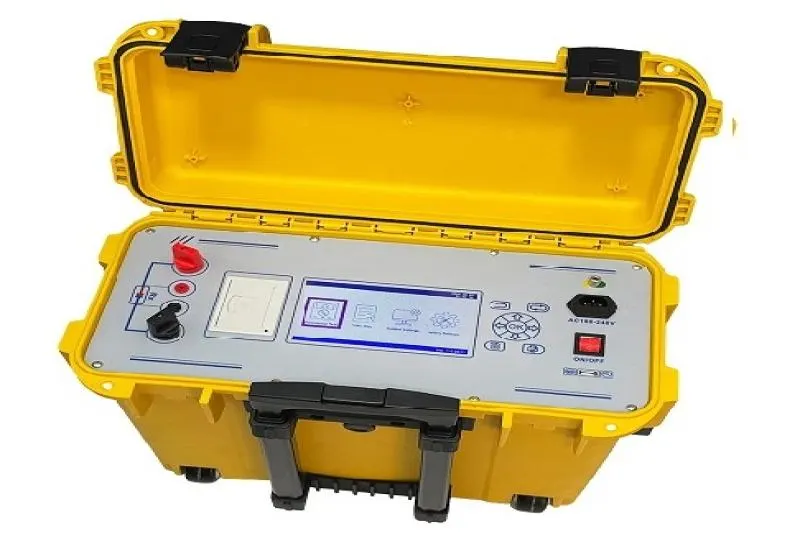
Electrical diagnostics with professional instruments
In industrial electrical systems, the quality of the connections determines the performance and safety of the installation. By renting instruments for electrical contact and continuity testing, companies carry out precise evaluations without buying specialized equipment.
These instruments measure resistance at electrical contact points with high precision, using methods that eliminate measurement errors.
Uses and applications
They are used to evaluate connections, detect faults in circuit breakers, analyze conductive joints and verify the electrical integrity of distribution and power systems. Applications include energy, manufacturing, transportation, infrastructure, telecommunications and any sector where electrical reliability is essential for continuous operation.
They help prevent failures, improve system efficiency, reduce the risk of overheating and verify technical standards in electrical maintenance.
Benefits
Measurement precision, fast testing, easy transport, versatility and the ability to adapt to different work environments.
Their specifications include measurement in very low resistance ranges, the use of high-intensity direct current, stable readings, a digital interface and a rugged design. Renting them gives access to reliable diagnostics and immediate availability on electrical projects.
Technical specifications
- Measurement range: 100 A (0-15.0 mΩ)
- 200 A (0-8.0 mΩ)
- 300 A (0-5.0 mΩ)
- Minimum resolution: 0.001 μΩ
- Measurement accuracy: ± (reading × 0.5 % + 0.001 μΩ)
- Test power supply: constant current and voltage limit, approximately 8.0 V.
- Test current: DC 100/200/300 A
- Test current accuracy: ± 5%
- Measurement time: fast, from 5 to 60 seconds (optional)
- Dedicated test lead: resistance <20 mΩ
- Charging power supply: input 180V~240VAC, 50Hz/60Hz
- Data storage: 100 sets of measurement data are stored.