


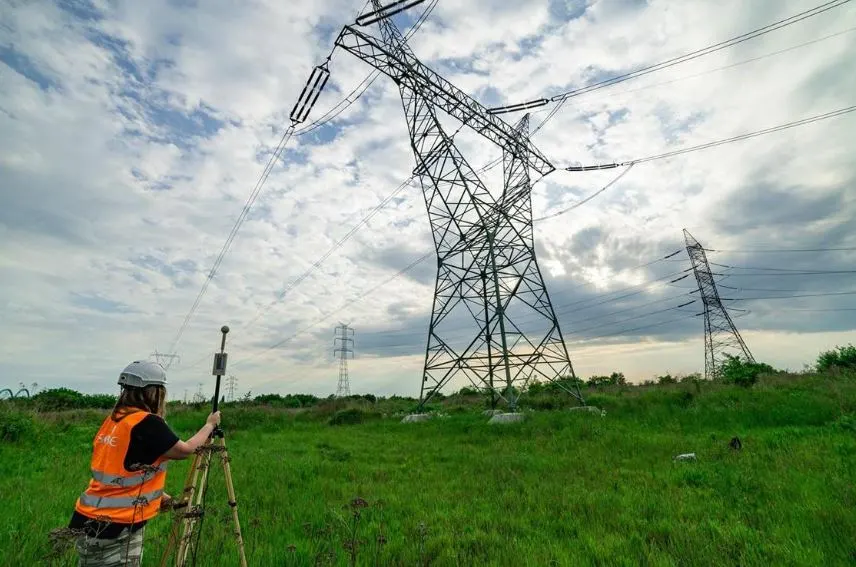
Evaluation of 60 Hz electric and magnetic fields for projects located near high-voltage lines and rights-of-way.
When an industrial building, plant, office building or infrastructure is planned close to electrical transmission lines, the electromagnetic conditions of the site may need to be evaluated.
Creativeit performs low-frequency electric and magnetic field measurements. We deliver technical information on the conditions around high-voltage lines.
Does CFE require an electromagnetic field study?
Requirements vary with the characteristics of the project, its location, the existing electrical infrastructure and the permit process involved.
When the project must demonstrate the electromagnetic conditions of the land, it is best to define the following first:
- Which quantity must be measured: electric field, magnetic field or both.
- Evaluation frequency.
- Measurement points.
- Measurement heights.
- Distances from the lines.
- Limits or acceptance criteria.
- Reference standard or specification.
Before the study, confirm with your permitting agent, CFE or the relevant agency the specific criterion they require for the project.
Standards for electromagnetic field measurement
Depending on the scope of the study, the following standards may be used as technical references.
NMX-J-610/4-110-ANCE
Electromagnetic compatibility — Part 4-110: Testing and measurement techniques — Methods for measuring the electric and magnetic field levels generated by electric power systems with respect to human body exposure.
This is a particularly relevant reference for measurements associated with electric power systems and low-frequency fields. Its methodology sets out procedures for measuring electric and magnetic fields around electrical installations.
NMX-J-610/6-311-ANCE
This standard relates to the evaluation of human exposure restrictions for electromagnetic fields. It may be used as a reference depending on the purpose of the evaluation.
IEC 61786
The IEC 61786 family sets out requirements and methods for measuring low-frequency electric and magnetic fields. It is particularly relevant for selecting and using measurement instrumentation in electrical installations.
Note: The definitive standard or acceptance criterion must be set according to the specific requirements of the project and of the relevant authority. The fact that a measurement standard serves as a reference does not make it the project’s acceptance limit.
What is measured near a high-voltage line?
Magnetic field
The magnetic field of an AC power line can be measured at different distances and positions. Results can be expressed in:
- µT: microtesla
- mG: milligauss
- A/m: amperes per meter
Evaluation at 60 Hz uses instrumentation designed specifically for low-frequency fields.
Electric field
When it is part of the project scope, the electric field can also be measured. Results are normally expressed in V/m (volts per meter). Measurements can be taken at different points on the land and at different heights to determine the spatial distribution of the field.
Evaluating distance from the lines
In industrial projects near transmission lines, the distance between the conductors and the building is an important parameter.
For example, if a building stands 18 meters from a transmission line, several measurement points can be set around the project boundary:
10 m → 15 m → 18 m → 20 m → 25 m → 30 m → 40 m
The values obtained are used to build an electromagnetic field vs. distance profile. This shows objectively how the field changes as the separation from the line increases.
Evaluation at different heights
In tall industrial buildings, measuring at ground level is not always enough. When the project requires it, measurement points can be set at different heights to characterize the electromagnetic conditions within the volume of the future building.
This is relevant when:
- The building is very tall.
- The conductors are close to the project.
- Sensitive electronic equipment is present.
- The project is within or close to a right-of-way.
- The electromagnetic conditions must be documented before construction.
Information needed for the study
To define the methodology, we request the following, when available:
Site information
- Property plan.
- Location of the building.
- Building dimensions.
- Planned height.
- Location of important equipment.
Power line information
- Tower locations.
- Distance to the property.
- Nominal voltage.
- Conductor configuration.
- Number of circuits.
- Conductor height.
- Available catenary information.
- Drawings provided by CFE.
If you do not have this information, an independent geometric/topographic survey may be necessary.
Measurement instrumentation
The instrument depends on the quantities to be evaluated.
For low-frequency magnetic fields, triaxial ELF meters can be used, which record the field on all three axes. To evaluate both electric and magnetic fields, specialized systems with sensors for both quantities are used.
The instrumentation must be suitable for the frequency of interest and, when the scope of the study requires it, have calibration and metrological traceability.
What does our report include?
Depending on the contracted scope, the report may include:
- Site description
- Location of the transmission lines
- Measurement methodology
- Instrumentation used
- Calibration certificates
- Measurement points and heights
- Measured magnetic field
- Measured electric field
- Results tables
- Field vs. distance graphs
- Photographic record
- Comparison with the established evaluation criterion
- Technical conclusions
Studies for industrial projects near transmission lines
We evaluate projects that must document existing electromagnetic conditions before or during the development of a facility.
The service can be used as supporting technical information for permit processes and project reviews, always subject to the specific requirement of the relevant authority.
Is your project near a high-voltage line?
Request an evaluation of low-frequency electric and magnetic fields.