


Inverters
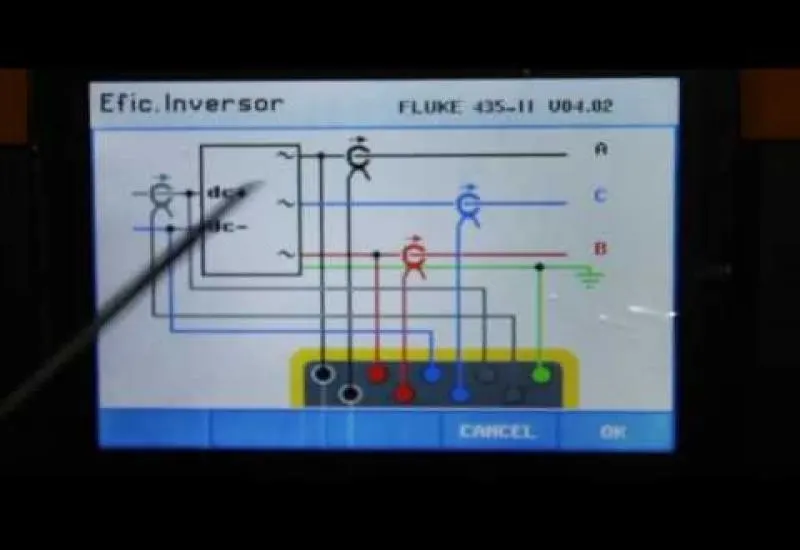
Our equipment simultaneously measures the AC output power and the DC input power of power electronic systems, using the optional DC clamp.
Power inverter efficiency
Power inverters are fed with DC current and convert it to AC current, or vice versa. Solar generation systems usually include an inverter that receives DC current from the solar cells and converts it into usable AC power. Inverter performance can decline over time, so they should be checked periodically.
Comparing input power with output power gives the efficiency of the system. We measure both at the same time to find out how much energy is lost in the conversion. The purpose of a photovoltaic inverter is to adapt the characteristics of the generated current to the total or partial demand of the applications.
In some applications that run on direct current, the battery voltage cannot be matched to the voltage required by all the loads. In those cases the best solution is a DC voltage converter.
In other applications, some elements run on alternating current. Since panels and batteries work with direct current, an inverter is needed to convert direct current into alternating current.
What characterizes an inverter
An inverter is characterized mainly by its input voltage, which must match that of the generator, by the maximum power it can deliver, and by its efficiency. Efficiency is the ratio between the electrical power the inverter delivers to the load (output power) and the power it draws from the generator (input power).
Efficiency varies with the power consumed by the load. It is worth knowing this variation, especially if the AC load is variable, so that the operating point of the equipment matches a specified average value.
Inverters for stand-alone installations
Requirements they must meet:
- High efficiency; otherwise the number of panels needed to supply the load would have to be increased unnecessarily. Not all inverters on the market meet this requirement, although equipment designed for these applications is increasingly easy to find.
- Adequate protection against short circuits and overloads.
- Automatic reset and disconnection when no AC equipment is in use.
- Ability to handle instantaneous power demands greater than 200% of their maximum power.
- Compliance with the requirements of the Low Voltage Regulations (Reglamento de Baja Tensión) for 220V AC installations.
In any case, the inverter is defined by the characteristics of the load, which determine whether more or less complex equipment is used. We recommend inverters designed for photovoltaic applications.
There are very different types of inverters, with widely varying complexity and performance. Depending on the loads to be supplied, a simple square-wave inverter may be enough or, if required, a sine-wave unit of greater or lesser sophistication.
Inverters for grid-connected installations
Electrical characteristics they must meet:
- Input voltage Vdc
- Inverter power kW
- Output voltage 0.85 – 1.1Vac
- Power factor above 0.95
- Frequency 49 – 51Hz
- Harmonic distortion rate (voltage and current)
- Three-phase above 5kW (recommended)
Requirements for grid-connected installations:
- High efficiency
- Low harmonic distortion
- Maximum power point tracking
- Low power consumption
- Overvoltage protection
- Galvanic isolation
- No islanding operation
- Automatic connection and disconnection
- Measurement and monitoring system