


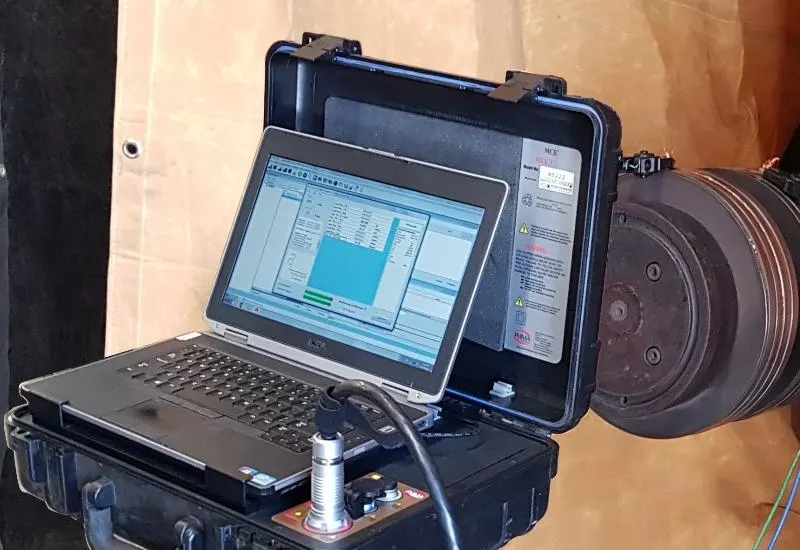
Inrush current measurement
We have equipment to measure the inrush current of electrical and electromechanical devices. It is a parameter for reviewing power quality and normally exceeds steady-state current consumption levels. This current can cause problems on the supply network, because of the disturbances introduced by the very large load the system momentarily sees, and it can damage internal components of the loads.
With Class A equipment and trained personnel, we measure the current levels your devices draw at startup.
Knowing the levels and parameters of the inrush currents of the elements connected to the network helps you recognize and anticipate the problems that reconnections can cause.
Parameters for characterizing the transient load during startup
- Maximum current levels during load startup.
- Voltage drop levels during load startup.
- Stabilization time of current and voltage levels.
- Total harmonic distortion.
- Peak power and power factor during startup.
Torque-speed curve
The torque-speed curve shows the torque the motor develops from startup to normal operation. At startup the motor develops the starting torque, then it shows the minimum torque and, at 80% of rated speed, the maximum torque. The torque then settles according to what the load demands.
Induction motor behavior is analyzed in two ways: dynamic and static. The most common way to present the curve is the static one, where certain assumptions are made to simplify the analysis. The dynamic method is more faithful to actual behavior.
The dynamic curve is the one that shows oscillations; the static curve is the one typical of electric motors and uses equivalent circuit theory to find the relationship between torque and speed across the entire operating range.
The electromagnetic transient has a significant influence on the torque-speed characteristic of the induction machine. For simplicity, transient analysis assumes the dynamic characteristic curve, and the static characteristic curve is used in steady state.
Inrush current in higher-efficiency motors
Motor manufacturers improve efficiency through these measures:
- More copper cross-section in the stator winding.
- Larger magnetic cores.
- Thinner, higher-quality magnetic laminations.
- Better rotor bar design.
- Reduced windage and friction losses.
- Improved air gap.
These improvements have led to HIGHER instantaneous inrush currents, although locked-rotor currents are similar to those of earlier designs, which has made it possible to keep the classification under current regulations.
When a higher-efficiency motor starts, nuisance tripping can occur at the circuit breaker (breaker or fuse) because of the high inrush current. If the breaker setting causes the motor current curve, from startup to rated value, to cross the adjustable trip curve of the breaker protecting it, nuisance tripping may occur. Tripping may even happen only every so many starts, because it depends on the point where the curve begins; the greatest danger is coinciding with the zero crossing of the current.
As a final recommendation, get to know the trip curve of the breaker in use (available from the manufacturer) and follow the recommendations of the standards for sizing electric motor protection.