


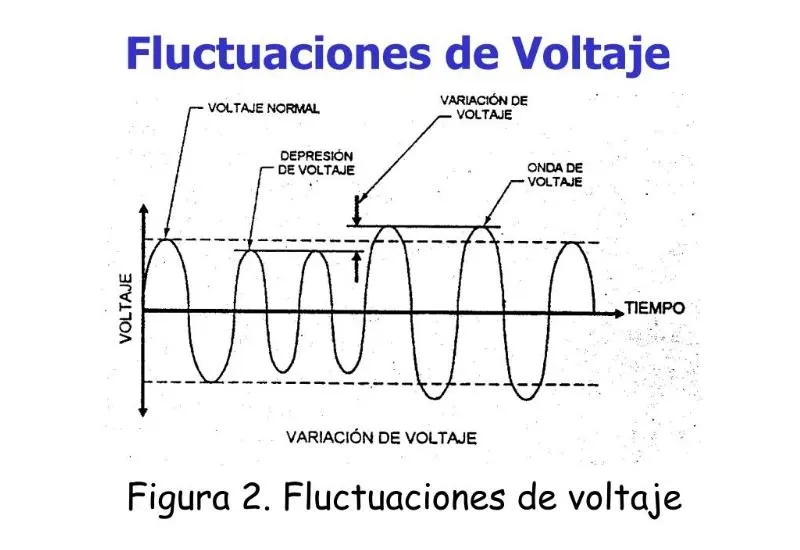
What voltage fluctuation is
Voltage fluctuation consists of rapidly occurring voltage dips caused by large or sudden increases in load current. The Fluke 435 II analyzer detects fluctuations caused by loads.
Fluctuations normally exceed the specified limit of 0.95 to 1.05 p.u.
They are systematic variations of the voltage envelope, or a series of random changes whose magnitude does not normally exceed the voltage ranges specified by the ANSI C84.1 standard.
Common causes
The most common cause is the rapid variation of loads that require a lot of reactive power, such as wind turbines, welders, rock crushers, sawmills, wood chippers, metal shredders and amusement park rides. It can cause visible fluctuations in lights and make other processes shut down or malfunction.
In transmission and distribution systems, one of the most common causes is arc furnaces. In weaker systems, fluctuations can be due to arc welding equipment and similar loads.
Flicker
Loads with rapid, continuous variations in current magnitude can cause voltage variations, often called flicker. The term comes from the effect of these fluctuations on lamps, which the human eye perceives as flickering.
Our service
We have trained staff and equipment to detect harmful fluctuations in your electrical system.