


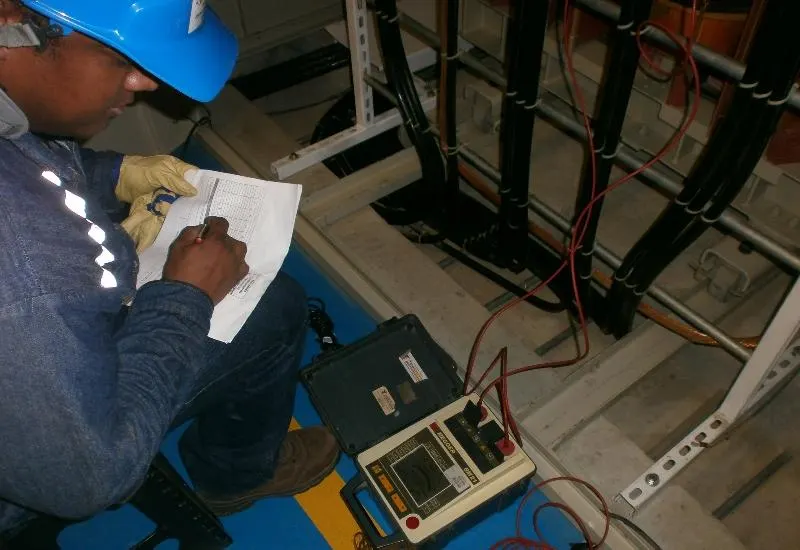
Three-phase imbalance analysis
We perform power quality analysis in Monterrey. Three-phase imbalance, or unbalance, is the phenomenon that occurs in three-phase systems when the voltages or the angles between consecutive phases are not equal. We have the personnel and the equipment to analyze, detect and quantify imbalances in order to save energy.
Why it occurs
Perfect voltage balance is technically unattainable. The continuous change of loads on the network makes the magnitude of the imbalance vary constantly. Simply connecting single-phase residential loads leaves the three-phase system with an unbalanced load between phases, and the voltage drops will not be balanced either, which results in unequal voltage levels.
A symmetrical generation system is one in which the three voltages have equal magnitude and their phasors are 120° apart. A symmetrical three-phase load produces three currents of equal magnitude and equal phase with respect to the voltage. A three-phase voltage or current system is perfectly balanced when its three phases (A, B and C) have an angular displacement of 120° between them and the moduli of their vectors have the same magnitude.
When the system is unbalanced, the vector moduli of each phase may differ, the phase shift between two vectors may differ from 120°, or both may occur at once. This way of representing the three-phase system is valid for both three-wire and four-wire systems, neutral included.
Imbalance limits
Imbalances must not exceed the following values:
- Current: < 10%
- Voltage: < 3%
In an unbalanced system, the neutral current and neutral temperature increase. A quick way to detect this is thermographic analysis, which we complement with power quality analysis.
Consequences of imbalance
Three-phase equipment operating on unbalanced voltages usually performs poorly and can suffer damage and a shorter service life. In three-phase induction motors supplied with unbalanced voltages, losses are dissipated in the stator winding, the rotor winding and the magnetic core, and there are additional losses as well.
A 2% voltage imbalance causes a 17% current imbalance, with a temperature rise of 65 degrees C (when it would normally be 40 degrees C). Electric motors are the most affected; in dynamic operation they show:
- Negative-sequence current.
- Electromagnetic torques opposing the main torque, which brake the motor.
- Increased internal losses.
- Temperature rise.
- Shorter service life.
For more information, contact us.