


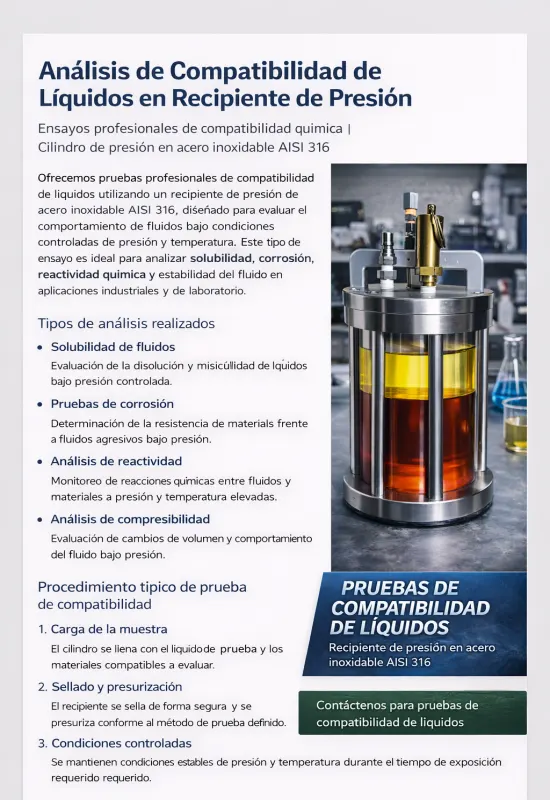
Mechanical integrity and leak-tightness tests
The Creative IT laboratory pressure vessel, made of AISI 316 stainless steel, makes it possible to perform leak and hydrostatic pressure tests under controlled conditions. It is used to validate the mechanical integrity, leak-tightness and reliability of components, assemblies and systems that operate with liquids or in pressurized environments.
These are structural validation tests, distinct from chemical compatibility, aimed at safety, performance and quality control.
What leak and hydrostatic pressure tests are
Hydrostatic pressure tests subject a component or system to internal pressure with an incompressible liquid, to verify:
- Absence of leaks
- Structural strength
- Quality of welds and joints
- Integrity of seals and connections
Leak tests detect microleaks and pressure losses under controlled conditions.
Types of tests
Hydrostatic pressure tests
- Gradual pressurization up to 500 psig
- Pressure hold tests
- Acceptance and rejection tests
- Controlled overpressure tests
Leak tests
- Visual leak detection
- Pressure drop monitoring
- Tracer liquid tests
- Validation of seals, valves and fittings
General test procedure
1. System preparation
- Component cleaning
- Initial visual inspection
- Secure installation inside the vessel
2. Filling and purging
- Complete filling with test liquid
- Removal of trapped air
3. Controlled pressurization
- Progressive pressure increase
- Continuous monitoring with calibrated pressure gauges
4. Hold time
- Pressure maintained for a defined period
- Observation of leaks or deformation
5. Depressurization and evaluation
- Safe pressure release
- Post-test inspection
- Recording of results
Standards and technical alignment
The tests can be aligned, under equivalent technical criteria, with:
- ASME BPVC Section X / VIII – Pressure tests (reference criteria)
- ASTM E9 / ASTM F2052 – Mechanical integrity (depending on the application)
- IEC 60068 – Combined environmental tests (where temperature applies)
Note: the vessel is used as laboratory test equipment and is not an ASME-certified vessel for continuous service.
Vessel summary data sheet
- Material: AISI 316 stainless steel
- Maximum working pressure (hydrostatic): 500 psig
- Recommended pressure with gas: ≤ 150 psig
- Vacuum capability: full vacuum
- Internal volume: ~2.6 L
Typical applications
- Hydraulic components
- Valves and manifolds
- Connectors and fittings
- Chambers, cells and small vessels
- Prototypes and systems under development
Client deliverables
- Pressure vs. time log
- Photographic evidence
- Acceptance / rejection results
- Technical test report
Creative IT performs laboratory leak and hydrostatic pressure tests with a focus on safety, reliability and technical traceability. Talk to the engineer to define the component, the target pressure and the scope of the test.